What “healthier” means for corn choices
You notice it first when the kernels taste less “corn-sweet” than you expected. The bag says “fresh,” the can says “whole kernel,” and it’s tempting to treat freshness as the automatic winner. But “healthier” gets slippery fast, because corn changes between the field, the store, and your stove—and labels don’t always describe the part that matters to your goal.
If you’re prioritizing lower sodium, the trade-off is obvious: many canned options arrive salted, and the numbers can vary a lot by brand and “seasoned” wording. If you’re prioritizing sweetness or a softer texture for quick dinners, a can can be more consistent than ears that have been sitting for days. And if your goal is simply “more filling,” you may care less about small vitamin shifts and more about portion size and what you pair it with. The practical limitation is that no single format stays best across every weeknight need—you’re comparing trade-offs, not winners.
Nutrients you actually keep after harvesting
The difference shows up when you shuck an ear and it smells “green,” but the first bite still lands more starchy than sweet. That isn’t your imagination so much as timing: after harvest, corn’s sugars tend to convert into starch, and that shift can happen before the corn ever reaches your fridge. So “fresh” can mean “recently picked,” or it can mean “fresh-looking,” and those two don’t always eat the same—especially if you’re chasing sweetness rather than just a vegetable side.
Processing changes a different set of details. Canned corn is typically heated, which can soften texture and reduce some heat-sensitive vitamins, but it also locks in a predictable product that won’t keep drifting day by day on your counter. Frozen corn often sits somewhere in the middle for consistency. None of this makes one format automatically better; it just means the nutrients you actually keep are tied to how long the corn sat, how it was treated, and whether the label adds “salted,” “no salt added,” or “sweetened” in small print.
Sodium, sugar, and the hidden trade-offs
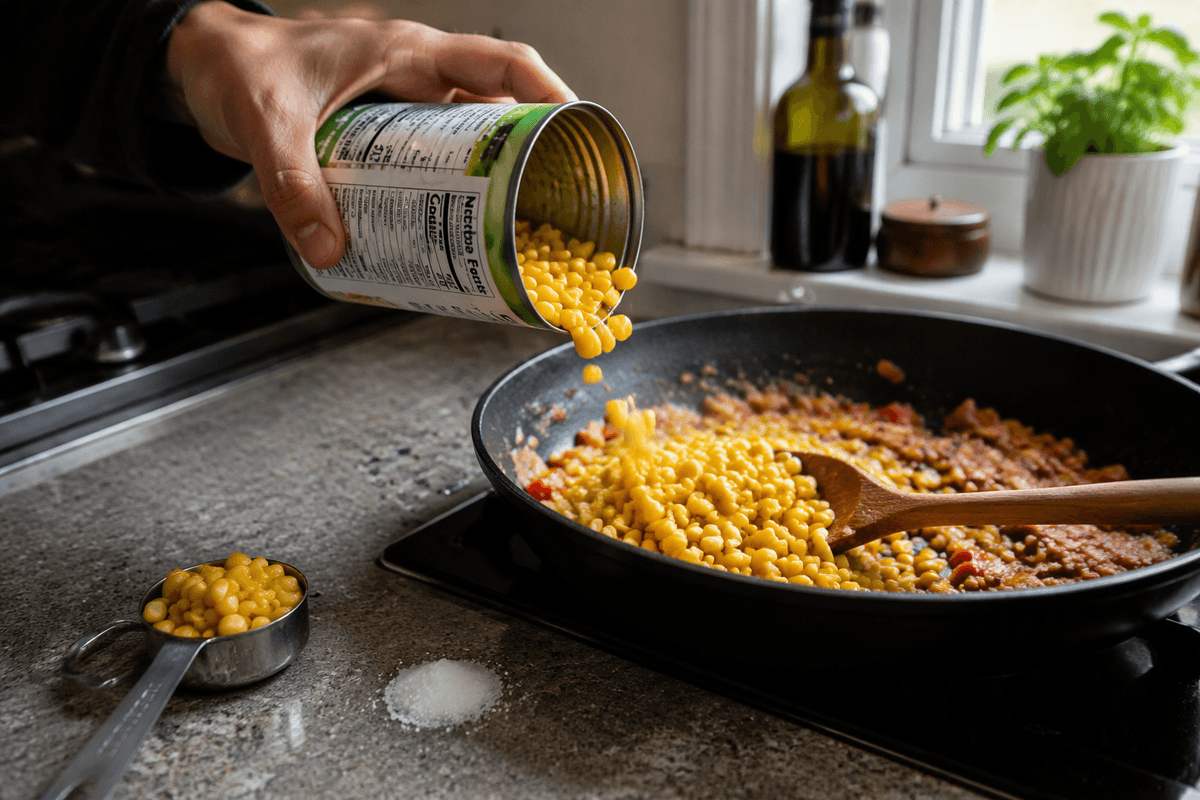
You see it in the ingredient list when you’re moving fast: “corn, water, salt.” Two cans can look identical on the shelf and still land very differently once you check the Nutrition Facts. Sodium is the headline trade-off with canned corn, but it isn’t just a yes/no issue—some “regular” options are modest, others climb quickly per serving, and the serving size can be smaller than what you actually pour into the pan.
Sugar is the quieter confusion. Canned corn doesn’t typically need added sugar to taste sweet, but labels like “cream style,” “sweet kernel,” or “seasoned” can change what else comes along for the ride. Meanwhile, “fresh” corn can taste less sweet simply because its natural sugars have already shifted toward starch, not because anyone added anything. In practice, you’re often choosing between predictable salt levels you can read on a label and unpredictable sweetness you can’t see until you cook it—and neither one maps perfectly to “healthier” without your specific goal.
How storage and cooking reshape corn’s impact
It’s the kind of thing you only notice when leftovers hit the microwave: the corn that tasted bright on day one can feel a little heavier by day three. Storage doesn’t just change flavor—it nudges how you portion it and what you do to bring it back. Fresh ears kept too long in the fridge can drift further from sweet toward starchy, while canned corn stays basically the same until you open it. Once the can is open, you’ve got the same clock running as any other leftover, and it’s easy to forget how quickly “I’ll use the rest later” becomes a bigger serving than you planned.
Cooking method is the other quiet reshaper. A quick sauté keeps kernels firmer, while boiling or long simmering pushes softness and can make it easier to eat more without feeling it. If you’re watching sodium, draining and rinsing canned corn can noticeably change what ends up in the pan—but it also washes away some of the “ready-to-go” taste that made it convenient in the first place.
Why the same corn can digest differently
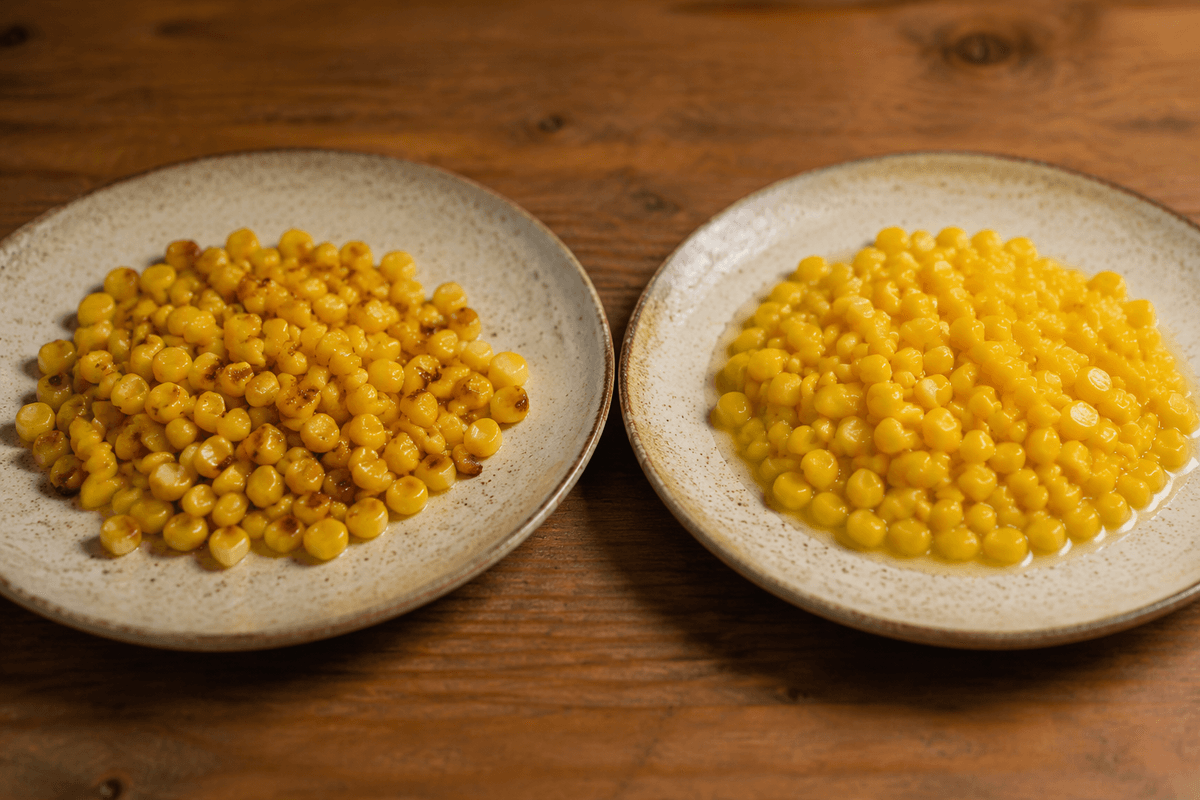
It can be surprising when the same “corn side” sits fine one night and feels a little heavy the next. Part of that is texture: firm kernels (often fresher-cooked or quickly sautéed) make you chew more, which slows how fast you eat and how quickly that starch hits your system. Softer corn (common with canned, long-simmered, or repeatedly reheated leftovers) tends to slide down faster, and it’s easy to serve yourself a larger scoop without noticing.
The other piece is what the kernels are acting like by the time you eat them. Corn that has shifted from sweeter to more starchy can feel more filling—but also more “dense” in some situations. And while draining/rinsing canned corn changes the sodium story, it doesn’t change that your digestion can still vary with portion size, what you pair it with, and how your gut handles corn’s tougher outer layers. When the pattern feels inconsistent, it’s often the format-plus-cooking details, not just “fresh vs. canned.”
Consistency versus idealism in everyday meal habits
It’s usually the Tuesday-night version of you making the decision: you grab what’s closest, not what’s “perfect.” That’s where corn choices get more honest. Fresh ears can feel like the ideal, but they’re also the most variable—sometimes sweeter, sometimes oddly bland, sometimes already drifting starchy depending on how long they’ve been sitting. Canned corn is the opposite: it’s predictable, which can matter more than small nutrient differences when you’re trying to keep dinners steady week to week.
If the only corn you reliably use is canned-and-salted, your “default” may quietly become a higher-sodium pattern. But if the only corn you buy is fresh and it keeps disappointing you, you may stop serving it at all. In practice, the healthier habit is often the one you repeat: the format you’ll actually portion, read the label on, and use before it turns into leftovers you keep picking at.
A practical decision matrix for common goals
The moment you’re staring at three options—ears, a bag of frozen, and a can—the “healthiest” choice usually becomes a goal question, not a moral one. If your week is already sodium-heavy, “no salt added” canned (or frozen) may fit better than a standard can, and it still cooks fast. If you’re chasing sweetness and crunch, fresher-picked ears tend to deliver that more reliably than “fresh-looking” ears that have sat a while. If your priority is predictable portions for weeknights, frozen kernels often make it easier to pour what you need and put the rest back.
For “more filling,” the decision is often less about the format and more about how you cook and serve it: firmer, quickly cooked corn can slow eating; softer corn can disappear into a bigger scoop. The label and your pan do most of the real work.