Why Oman’s peaks and canyons surprise first-timers
The first time I pointed the rental car toward the Hajar Mountains, I expected “nice desert hills” and a couple of decent photo pull-offs. Instead, the terrain pivots fast: tight limestone folds, sudden drop-offs, and villages clinging to terraces that look engineered rather than natural. It’s thrilling—but it also means your day can evaporate if you treat every signposted “viewpoint” as equal, because the road geometry (and slow climbing) makes short distances feel long.
What surprises most first-timers isn’t just the height; it’s the contrast packed into a single drive. You can go from hot valley floor to cool air and cloud scraps near the rim, then back down into a wadi corridor that feels like a different country. Mid-day heat flattens the canyon drama into haze, while late afternoon light can make even a brief rim stop feel “worth it.” If you’re building a 7–10 day loop, this is where realism matters more than ambition.
The other shock is how quickly logistics start shaping the scenery. Some of the famous mountain roads reward 4WD and confident hairpins; in a 2WD sedan, you may still reach standout overlooks, but you’ll need to be choosier and accept fewer “bonus” detours. And wadis aren’t a guaranteed swim-and-stroll—water levels, slippery rock, and flash-flood risk can turn a planned easy outing into a cautious turnaround.
Choosing the right region: Jebel Akhdar, Shams, Hajar
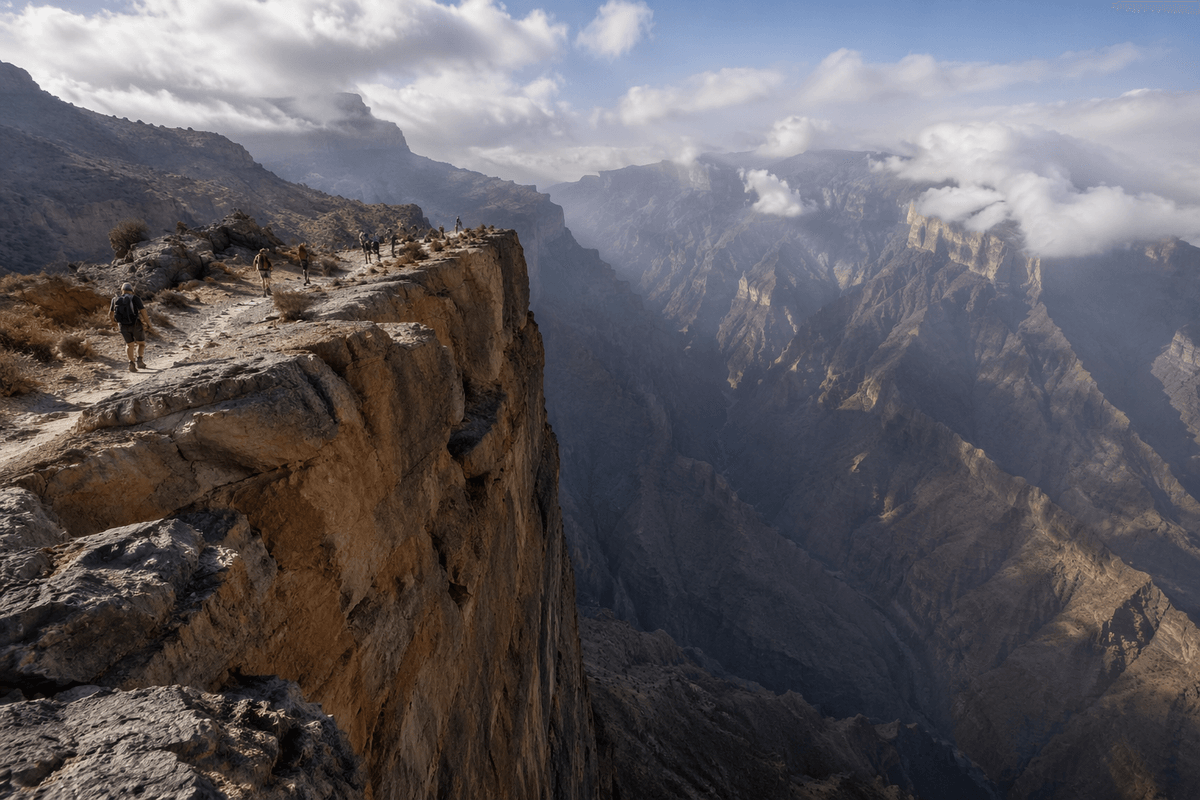
The first real decision is whether you want “easy altitude” or “big void.” Jebel Akhdar is the neatest on-ramp to mountain scenery: cooler air, terrace villages, and viewpoints that feel curated, but it’s also the place where rules can quietly shape your plan—many access roads are effectively 4WD-gated, and even when you can go up, you’re sharing the rim with more organized tours and hotel traffic.
Jebel Shams is the drama pick: Oman’s most convincing canyon scale, especially if you’re happy with a rim walk rather than a swim. It’s also where time slips—driving is slower than it looks on the map, and weather can blunt the payoff (wind, haze, or cloud swallowing the drop). If you only have one “mountain centerpiece” in a 7–10 day loop, Shams usually earns it, but it’s not a casual half-day add-on.
“The Hajar” as a broader region works best as connective tissue: smaller wadis, villages, and short viewpoints that stack up between Muscat, Nizwa, and the coast. It’s easy to over-collect stops; in 2WD, you’ll do better picking one strong mountain base (Akhdar or Shams) and using the rest for flexible, low-commitment detours.
Mountain viewpoints that justify the drive
I almost skipped the first “official” lookout on the climb because it looked like just another lay-by, and I was trying to protect the day from death-by-stops. That restraint paid off later: not every viewpoint deserves a detour, but the ones that do tend to have one thing in common—clean canyon geometry you can actually read with your eyes, not just photograph. If the air is hazy (common by late morning), prioritize higher, more exposed rims earlier; otherwise you’ll arrive at noon and wonder why everyone raves.
On Jebel Shams, the payoff viewpoint is the balcony-style look into Wadi Ghul (often called Oman’s “Grand Canyon”). It’s dramatic even without a long hike, and it’s the clearest “void” you’ll get for the time invested. The last stretch can be slow, rough in places, and after rain it can feel punishing in a low-clearance 2WD. If your rental agreement or comfort level makes that stressful, it’s better to stop short at a solid rim pull-off than white-knuckle to the “highest point” for a marginally different angle.
Jebel Akhdar is less about a single jaw-drop and more about stacked viewpoints over villages and terraces—great in late afternoon when shadows add depth, slightly flat in harsh midday light. It’s also where the 4WD gatekeeping can mess with plans: if you can’t (or shouldn’t) drive up, don’t burn hours trying to negotiate it—use the lower Hajar viewpoints as your fill-in and save your long drive for Shams, where the scale is harder to replicate anywhere else.
Canyon landscapes: wadis, rim walks, and gorges
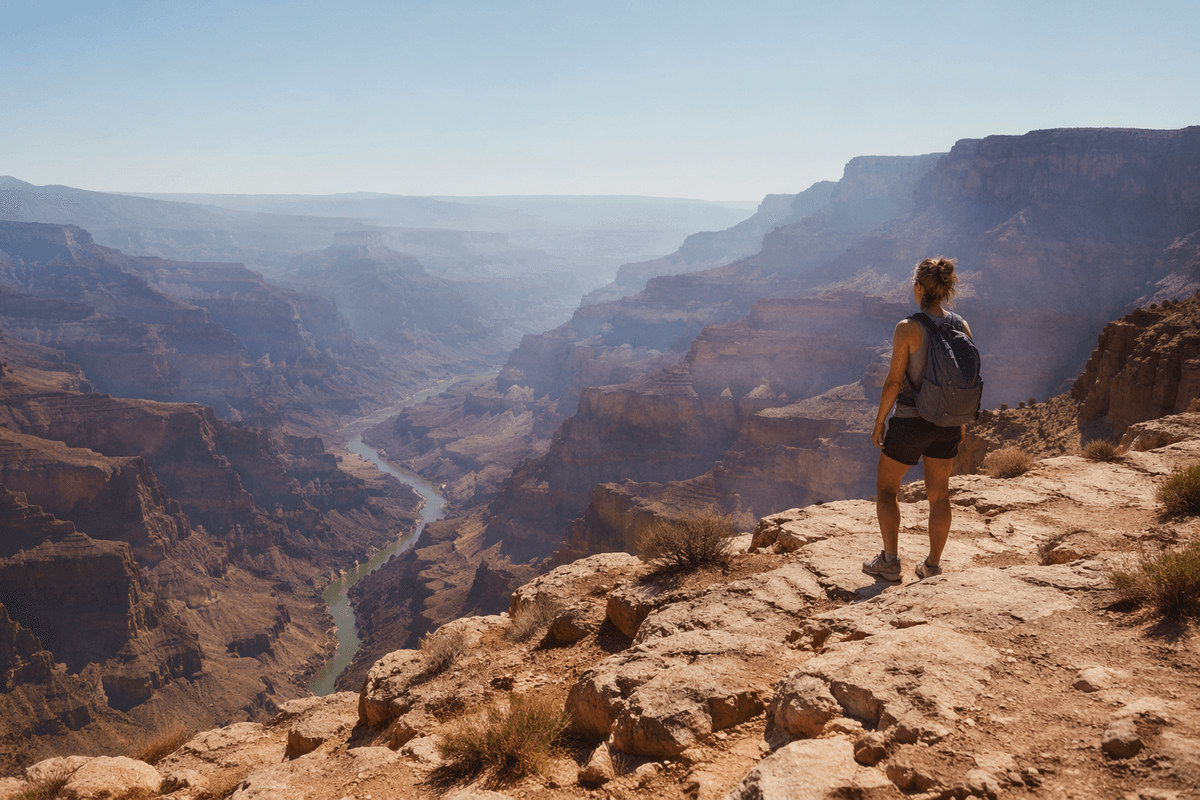
The day I tried to “just pop into a wadi” between Nizwa and the mountains, it ate half the afternoon—partly because parking and access points aren’t always obvious, and partly because once you’re in the corridor you move at water-speed, not road-speed. Wadi Bani Khalid is the easiest first-timer win if you want water and scenery without committing to a technical route, but that convenience pulls crowds and noise into what looks serene in photos. If you’re driving 2WD and want a reliable swim stop, it’s a safer bet than rougher wadis—just go early, or accept that the best pools won’t feel private.
For pure canyon scale with minimal fuss, the rim walk on Jebel Shams (the Balcony Walk) is the most efficient trade of effort for drama: you’re on the edge quickly, and you can turn around whenever heat, wind, or timing starts to bite. It’s not a place to “push through” at midday—sun and exposure make it feel harder than the distance suggests, and haze can erase depth. I liked it most when I treated it as a timed outing (a couple hours, tops) rather than an all-day hike.
Gorge drives and narrow wadi roads can look tempting on the map, but this is where 4WD reality matters: after rain, even short unpaved sections can turn a confident plan into a cautious retreat. If you’re choosing between another wadi detour and a dependable rim viewpoint, the rim usually delivers more predictable canyon payoff for the hours you have.
A realistic plan: what to prioritize, then let go
On a 7–10 day loop, I’d anchor the whole plan around one guaranteed “scale” moment: Jebel Shams for the Wadi Ghul overlook plus a timed Balcony Walk, ideally early or late when haze and heat don’t steal the depth. If the approach road (or your rental terms) makes that stressful in 2WD, don’t force the last rough miles—turning a viewpoint into a white-knuckle drive rarely improves the memory.
Then choose exactly one water wadi day, not three half-wadis. Wadi Bani Khalid is the dependable option for first-timers, but the convenience brings crowds; going early is the difference between “refreshing” and “theme-park energy.”
Everything else is optional texture: Jebel Akhdar if you can access it without negotiating a 4WD gate, or lower Hajar detours if you can’t. The clean decision cue: if it adds hours and uncertainty, let it go and protect your best light.