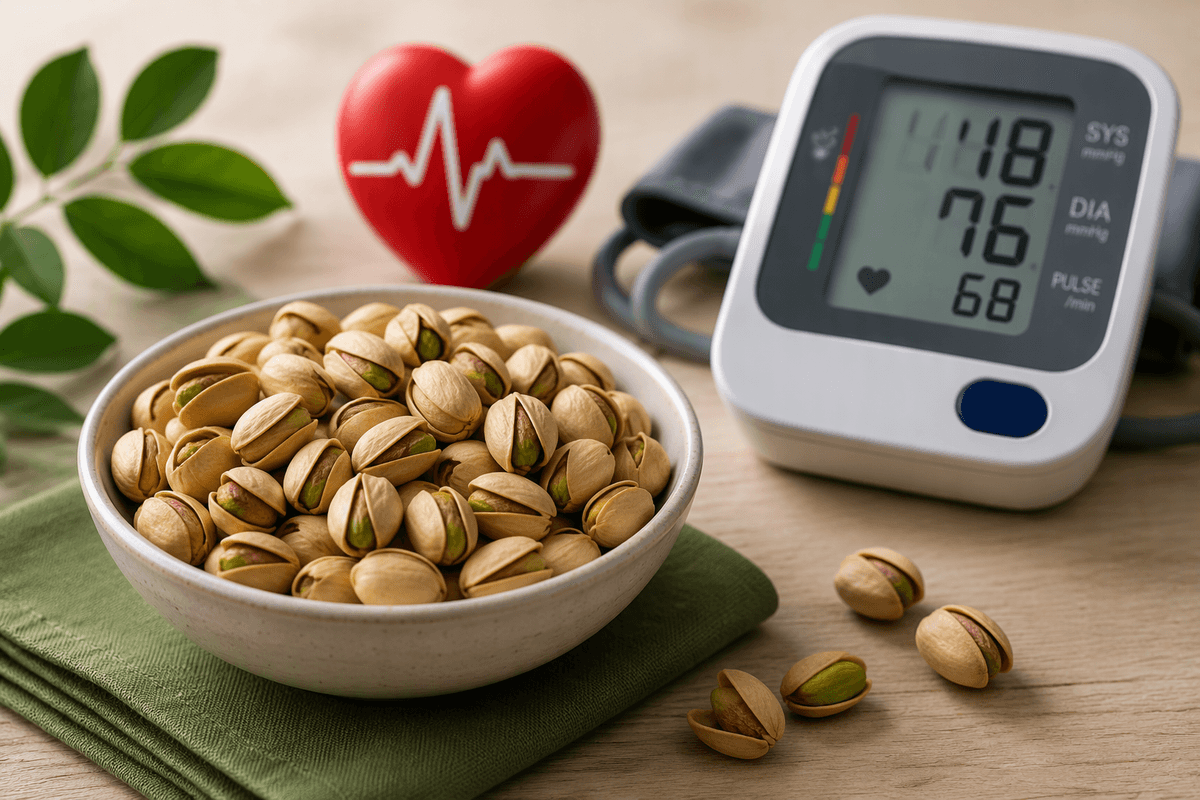
Why pistachios get linked to lower blood pressure
You notice it first in the snack bowl: the pistachios feel “cleaner” than chips, but your numbers the next morning don’t magically drop. That’s usually where the confusion starts. Pistachios get linked to lower blood pressure less because they act like a quick fix and more because they tend to replace something else—salty, packaged, easy to overeat, and often paired with an extra drink or late-night bite.
When that swap sticks, the pattern around your day changes in quieter ways: more potassium and magnesium showing up consistently, more fiber and unsaturated fat keeping you satisfied a little longer, and sometimes less sodium overall (depending on whether they’re salted). None of that guarantees a noticeable shift on a home cuff, especially when stress, sleep, and timing bounce readings around. But over a few weeks, those small, repeated trade-offs are why some people see a slow drift downward—or why others see nothing if portions creep or the “healthy snack” comes in a salty form.
Potassium, magnesium, and the artery relaxation effect
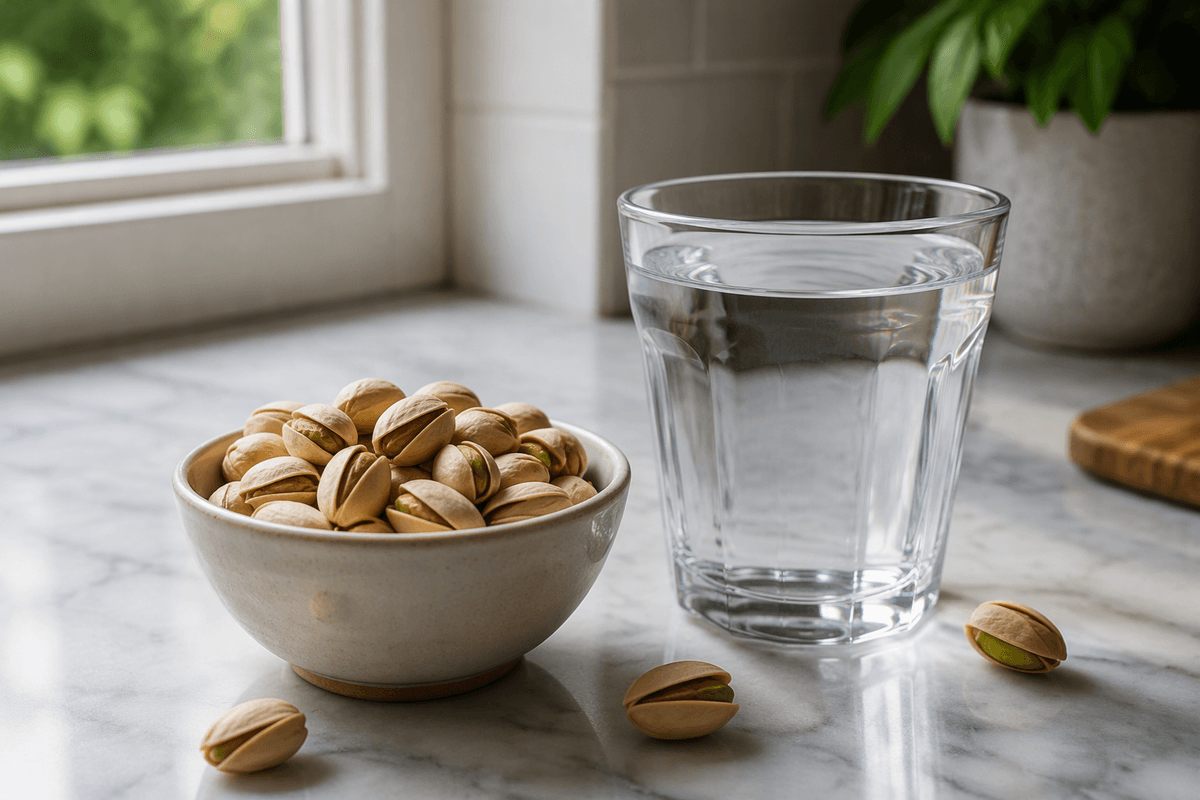
It can feel a little anticlimactic when you add pistachios and the only thing that changes is your thirst—or a faint “lighter” feeling after snacks. That’s partly because the minerals people talk about, potassium and magnesium, don’t work like a switch you flip before a blood pressure check. They show up in the background, day after day, influencing how the body handles fluid balance and how easily blood vessels can relax when they’re supposed to.
In practical terms, a snack swap matters most when it nudges your overall pattern: less sodium-heavy crunch, more potassium coming in regularly, and enough magnesium to support smoother muscle function in vessel walls. But it’s inconsistent by design—your portion size changes, your other meals still carry most of the day’s sodium, and your home readings can look “worse” after a poor night of sleep even if the snack choice was better. If a drift happens, it tends to look like fewer high spikes rather than a dramatic new baseline.
Healthy fats and nitric oxide signaling changes
You might notice the difference more in your mouth than on the cuff: pistachios leave a slower, steadier “I’m done snacking” feeling, while the salty crunch you replaced had you reaching back in five minutes later. Part of that is the fat profile. Pistachios skew toward unsaturated fats, and over time that can change the mix of fats your blood vessels are exposed to across the day—especially if they’re replacing snacks built around refined starch and added oils.
This is where nitric oxide gets mentioned, and it’s easy to overread it. Nitric oxide is basically one of the body’s “relax” signals for blood vessels, and diets that lean more on unsaturated fats (and less on heavily processed snack foods) may support that signaling. It’s not a clean, one-variable experiment in real life: you might still have a high-sodium dinner, you might eat the pistachios on top of your usual snack, and your readings may stay flat even if your vessels are behaving a little differently between measurements.
Weight, fullness, and pressure changes that lag
It’s often the waistband—or that mid-afternoon “why am I still hungry?” feeling—that shifts before your blood pressure does. Pistachios can be oddly self-limiting because they take time to eat and they sit heavier than a handful of crackers, so the snack may end sooner. But it’s not consistent: on distracted days, a “small” bowl can quietly turn into two servings, and the calorie math stops looking like a swap.
When the swap truly replaces a more processed snack, the lag makes sense. Weight and waist changes (if they happen at all) tend to show up over weeks, and any blood pressure nudge that comes from carrying a little less weight usually follows behind that. Your home readings can keep bouncing during the same period—stress, sleep, alcohol, and timing can mask a slow drift. So the pattern to watch is less “instant drop,” more “fewer stubbornly high days” once the new snack routine actually sticks.
Salted pistachios: when the ‘healthy’ snack backfires
There’s a particular moment where the swap stops feeling “clean”: you finish a small handful of salted pistachios and immediately want water, then your next reading looks a touch higher than you expected. It’s easy to blame the nuts themselves, but the more common issue is the salt wrapper you didn’t really notice. Salted pistachios can slide back into the same sodium pattern as other snack foods—especially if you’re eating them late, pairing them with something salty at dinner, or snacking straight from the bag where portions blur.
The upside (potassium, fiber, unsaturated fats) can still be there while the sodium pushes the other direction. For someone tracking mildly high numbers, this can look like “pistachios don’t work,” when it’s really “my snack is still salty.” Even then, it won’t show up perfectly: sodium effects can be uneven from day to day, and a single salty evening doesn’t always translate into a predictable morning cuff number.
Blood pressure readings vary more than people expect

Some mornings the cuff just feels tighter, even before it gives you a number. You did the “right” snack, you went to bed at a reasonable hour, and the screen still flashes a reading that looks like you backslid. For a lot of people, that’s the most discouraging part of trying pistachios as a daily swap: the day-to-day spread can be bigger than the change you’re hoping to see.
Home blood pressure can swing with small things that don’t feel like “health choices” at all—how long you sat quietly beforehand, whether you talked during the measurement, a slightly different arm position, a rushed morning, poor sleep, an extra drink, or a salty dinner that overwhelms whatever your snack improved. So the more useful question becomes: are your weekly averages drifting, or are you just catching more random spikes? Pistachios may help the first without reliably fixing the second.
Who may notice bigger shifts, and why
You might be the person who notices a real difference if pistachios replace a very consistent source of sodium—daily chips, crackers, takeout “extras,” or late-night salty snacking where portions blur. In that situation, the shift isn’t mystical; it’s that your baseline salt load and processed-carb snacking drop, while potassium, fiber, and unsaturated fats show up more reliably. People who are a bit more salt-sensitive, or whose overall diet is low in potassium-rich foods, may see the weekly average move sooner—though it can still be uneven.
On the other hand, if your dinners still carry most of your sodium, or pistachios simply get added on top of your usual snacks, the numbers may stay flat. And if you’re already measuring inconsistently, the “effect” can look like noise until you zoom out to trends.