You’ve got cash ready, but not endless time
The money is sitting there, maybe in a high-yield savings account, maybe as a rollover that finally cleared, and the pressure is weirdly two-sided: wait too long and it feels like you’re falling behind, rush in and it feels like you’re gambling. Meanwhile, the rest of life doesn’t pause. Earnings calls happen on weekdays, markets move while you’re in meetings, and “I’ll research this tonight” turns into a half-read thread and a decision made on vibes.
That time constraint is the first real filter. Index funds and individual stocks aren’t competing on intelligence; they’re competing on maintenance. If the plan needs weekly attention to feel safe, it won’t survive travel, deadlines, or a bad month. Whatever you buy has to fit the amount of focus you can reliably give it, even when you’re busy and markets are noisy.
First constraint: you need a plan you’ll actually follow
The first hard truth is that the “best” strategy on paper doesn’t matter if it collapses under normal stress. A plan that assumes monthly deep research, perfect discipline, and calm behavior during drawdowns is basically a plan for someone else. The friction shows up fast: transfers take a few days, your 401(k) menu is limited, and the market chooses the week you get slammed at work to drop 4% and test whether you meant what you said.
So the constraint becomes behavioral before it becomes financial. How many decisions can this plan demand without turning into avoidance? How easy is it to automate contributions, rebalance, and stay diversified without needing a fresh conviction every quarter? If the answer is “it depends on me staying motivated,” you’re not designing an investment plan; you’re designing a recurring willpower project, and those have a surprisingly high annual fee.
The useful test is simple: if you couldn’t look at markets for 60 days, would the plan still execute correctly and keep risk contained? If not, it’s too fragile for real life.
When simplicity matters, index funds become the default

Once you apply that “60 days away” test, a broad index fund starts to look less like a compromise and more like the cleanest way to buy time. It’s one decision that quietly bundles hundreds or thousands of companies, so your results don’t hinge on whether a single CEO stumbles or a product cycle disappoints. The trade is straightforward: you give up the chance to be dramatically right about one stock in exchange for removing the ongoing requirement to be frequently right.
From a maintenance standpoint, index funds win because the work shifts from analysis to setup. You can automate contributions, keep diversification without adding new tickers, and avoid the slow creep of “just one more position” until you’re running a tiny, accidental hedge fund. Costs matter here too: low expense ratios don’t feel urgent in a good month, but over years they’re a predictable drag you can control on day one.
That doesn’t make index funds emotionally easy. It just makes the process harder to break when life gets busy.
The new limitation: index funds won’t prevent discomfort
The first surprise, after you buy the “easy” option, is that it still doesn’t feel easy. A total market or S&P 500 index fund can drop quickly and for reasons that don’t map cleanly to any one headline, and that lack of a single culprit is its own kind of friction. You did the sensible thing, and the account balance still swings. If the cash was earmarked for something within a few years, that timing mismatch shows up fast.
It also removes the comforting illusion that research will save you. With an index fund, there’s no earnings call to listen to, no rival to out-analyze, no quick fix besides changing your allocation or selling. In a drawdown, the discomfort is mostly behavioral: watching “the market” fall while knowing the plan is to keep buying anyway.
So the limitation isn’t performance as much as expectations. Index funds reduce single-company blowups and decision fatigue, but they don’t smooth the ride, and they won’t stop you from feeling every normal, unavoidable part of market risk.
If you still want stocks, define a safe sandbox
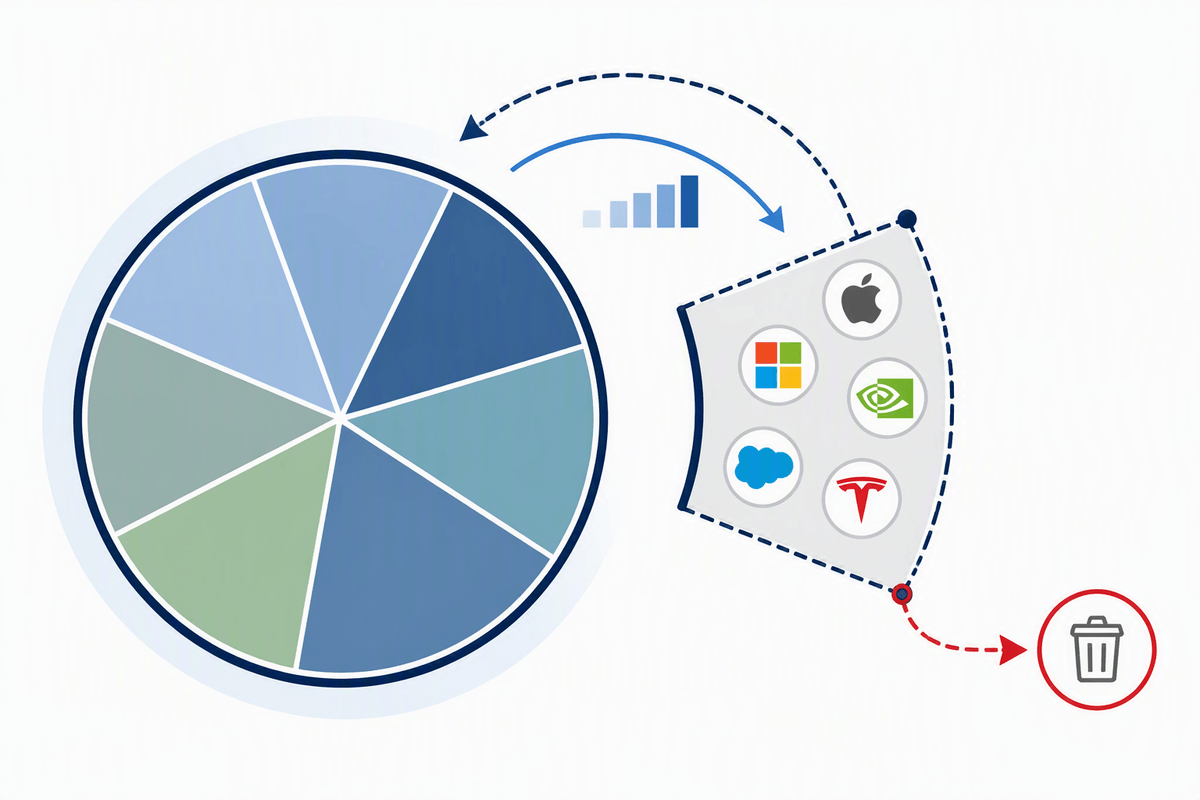
After a few down days in an index fund, the urge to “do something smarter” often shows up as a stock idea. That’s not automatically reckless, but it gets expensive fast if it changes the whole plan. The practical move is to separate curiosity from core exposure: keep the index fund as the default engine, then carve out a small, explicitly limited sleeve for individual stocks.
Make the sandbox rules mechanical, because mood won’t cooperate when prices move. Cap it at a percentage you can watch drop 30–50% without forcing a sale of the boring portfolio (many people pick 5–10%). Require each stock to start small, with a maximum position size, and limit how many names you’ll own so you don’t recreate an index fund with worse diversification. If a stock doubles, rebalance back to the cap; if it breaks your thesis, sell without “averaging down” to prove a point.
The goal of the sandbox isn’t to beat the market. It’s to make experimentation survivable.
A simple starting framework for your first year
Once the sandbox exists, the next frustration is timing. The cash feels like it should be “put to work,” but a single lump-sum buy can turn into instant regret if the market drops the next week. A first-year framework is mostly about removing that pressure: decide what portion is long-term money, then decide how quickly it enters the market, and do it the same way even if the headlines get loud.
One workable setup is: pick a core index mix you can hold through a 30–40% drawdown, automate new contributions, and phase the starting cash in over a fixed window (say 3–6 months) so the decision isn’t refreshed every dip. Rebalance on a calendar, not a feeling. If you’re using stocks, keep the sandbox capped and only add on scheduled dates, because “opportunistic” usually means “emotional” in real time.
The constraint you’re managing is decision count. Fewer moves means fewer chances to improvise badly when the first uncomfortable quarter shows up.
The goal isn’t brilliance; it’s staying invested
By the end of the first year, the pattern is usually obvious: the results didn’t come from the weeks you felt sharp, they came from the months you didn’t interfere. The real enemy wasn’t “picking wrong,” it was changing rules midstream—pausing contributions after a drop, chasing a hot stock after a run, or letting a scary headline turn a long-term allocation into a short-term bet.
So the bar for a “good” approach is less about finding the perfect fund or the perfect company and more about whether it survives boredom and stress. If the core index mix kept getting bought on schedule and the sandbox stayed inside its cap, you did the job. If it didn’t, the fix isn’t new tickers; it’s fewer decision points and tighter mechanics.