You enable round-ups, expecting painless progress
It usually happens in a five-minute gap between meetings: an ad promises that saving can feel invisible, so you download the round-up app, connect your card, and picture small wins stacking up without another “budget reset.” The setup looks simple, but there’s a quiet leap of faith in the middle—handing over account access, agreeing to transfers you won’t really notice, and trusting the app to stay out of the way of rent week. The expectation is clear: painless progress, no new habits, no spreadsheets. What you don’t know yet is whether the progress will be real or just movement.
The toggle is easy: link a debit or credit card, pick a “multiplier,” and choose where the round-ups land. In the moment, it feels like found money—spare change rescued from everyday spending. The friction shows up in small places: another login, another set of notifications, another service that might charge a monthly fee. Still, the pitch is hard to resist because it doesn’t ask for a number big enough to trigger anxiety. It asks for permission to skim, and that sounds harmless.
First month: the balance moves, but barely
The first month is when the promise gets tested, usually because you check the app on a Sunday night and expect a satisfying jump. Instead, you see a balance that’s technically higher, but not meaningfully different. If you’re spending $2,000–$3,500 a month across card swipes, the round-ups often land in the $15–$60 range unless you set a high multiplier. It feels like progress because there’s activity—dozens of tiny transfers—but it doesn’t change what’s possible in your real week-to-week cash flow.
The timing makes it more confusing. The app may show round-ups instantly, while the actual transfers post in batches a few days later, so the “saved” number can look inflated compared to your bank balance. Meanwhile, that same month probably includes one bigger leak—delivery fees, a forgotten subscription, a higher utility bill—that wipes out the psychological win. Nothing is broken; the mechanism is just small by design.
Check the fee line and do quick math
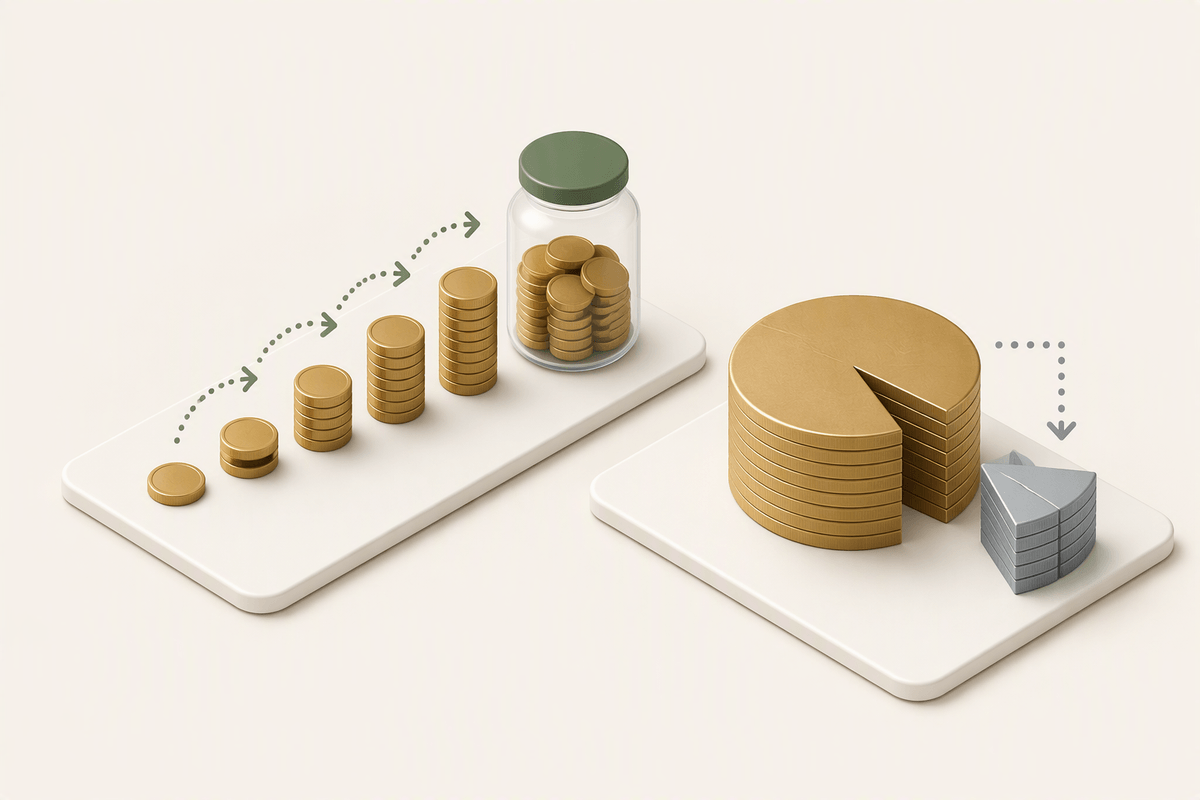
The next thing that changes the mood is a line item you didn’t feel during setup: the monthly fee. It’s usually small enough to ignore—until you compare it to what the round-ups actually produced. If your first month netted $28 of round-ups and the app costs $3, that’s more than 10% of “progress” gone before you’ve earned a cent of interest. Even at $5 a month, the fee can quietly eat a third of a $15 month, which is exactly the kind of month round-ups create when spending is light or you use cash more often.
The math isn’t complicated, just a little unforgiving. Annualize the fee (say $36–$60 a year) and ask what your round-ups would need to average to make that feel acceptable, given the yield on the destination account. If the app parks money somewhere earning 0%–1% while your alternative is a 4%–5% high-yield savings account, the gap is real, but the fee is usually the bigger drag. At this point, it’s less “set-and-forget” and more “pay-for-motion.”
Ask what you sacrificed: debt, interest, cash flow
After the fee math, the next check is what the round-ups displaced. Those transfers aren’t “extra” if they pushed you to carry a balance, delay a bill, or shrink the cushion that keeps you from overdrafting around rent week. If you’re revolving on a credit card at 18%–29% APR, sending $30–$60 into a low-yield pocket can be a negative trade, even if it feels like saving. The sacrifice is invisible because it shows up later as interest, not as a failed transfer.
Cash flow is the other constraint. Round-ups tend to batch and post after the spending happens, so they can land on the wrong side of payday. If your checking routinely runs tight, the “tiny” savings habit can quietly increase late fees, overdraft risk, or the need to float expenses on credit—costs that swamp the psychological win.
Where round-ups shine: behavior wins and guardrails

Still, there’s a version of this that works well: when the goal isn’t maximizing return, it’s preventing the money from disappearing into everything else. Round-ups shine when they function like a guardrail—something that quietly diverts a little cash before it gets “claimed” by impulse spending. If you’ve tried setting a $200 auto-transfer and kept pausing it when the month feels tight, the smaller, frequent moves can be easier to tolerate, even if the total is modest.
The behavioral win is that the system stays attached to what you already do (daily spending) and creates consistency without another decision point. It also helps when the destination is purpose-built: an “emergency buffer” bucket, a short-term sinking fund, or a savings account at a different institution you don’t log into every day. The constraint is real—you’re paying for structure—so the value is highest when that structure measurably reduces missed savings months or impulse leakage.
Data, overdrafts, and transfer timing surprises
By month two, the annoyances are less about the dollars and more about the plumbing. Linking the app often means handing over transaction-level data—merchant names, categories, balances, sometimes payroll timing. Even if the company is reputable, it’s still another place your spending history lives, and another service that can change its privacy terms later. If the upside is $20–$40 a month, that trade starts to feel lopsided.
The bigger surprise shows up when transfers don’t match your mental calendar. Many apps estimate round-ups in real time but pull money later, in batches, and not always on your payday rhythm. If checking runs close to zero between paychecks, a $6 batch on the wrong afternoon can trigger an overdraft fee that wipes out months of “saving.” It’s not dramatic—just one mistimed pull, one pending bill, and suddenly the set-and-forget feature is managing your cash flow for you.
If you keep it, tune it for impact
Once the timing surprises are on your radar, the only way a round-up app earns its spot is if you make it behave like a tool, not background noise. Start by changing the destination: if it can’t land in a high-yield savings account (or at least a bucket you won’t raid), the transfers are mostly optics. Then cap the risk—set a low maximum per day or per week, and align withdrawals to just after payday if the app allows scheduling. The “best” setting is the one that won’t ambush checking on a random Tuesday.
Next, treat the multiplier like a dial, not a flex. If your average month is producing $20–$40, a 2x–3x bump can matter more than hunting for pennies, but only if your fee stays under ~10% of what you save. Finally, pause it automatically when balances drop below a floor (or keep a dedicated buffer in checking). That one guardrail usually does more for results than any clever rounding rule.
A simple checklist to decide in ten minutes
Open last month’s activity and force it into one line: round-ups saved $__ and the app cost $__ (all-in, including any “premium” tier). If the fee is more than about 10% of what moved—or the money landed somewhere earning basically nothing—the app is a luxury, not a system. Then ask one uncomfortable question: did those transfers increase card float, delay a bill, or bring checking closer to overdraft around rent week?
Keep it only if two things are true: (1) it reliably prevents “missed saving months” more than a simple payday auto-transfer would, and (2) you can add guardrails (high-yield destination, withdrawal timing after payday, a low-balance pause, and a weekly cap). If you can’t set those, cancel and redirect the same dollars to debt or a scheduled transfer.